
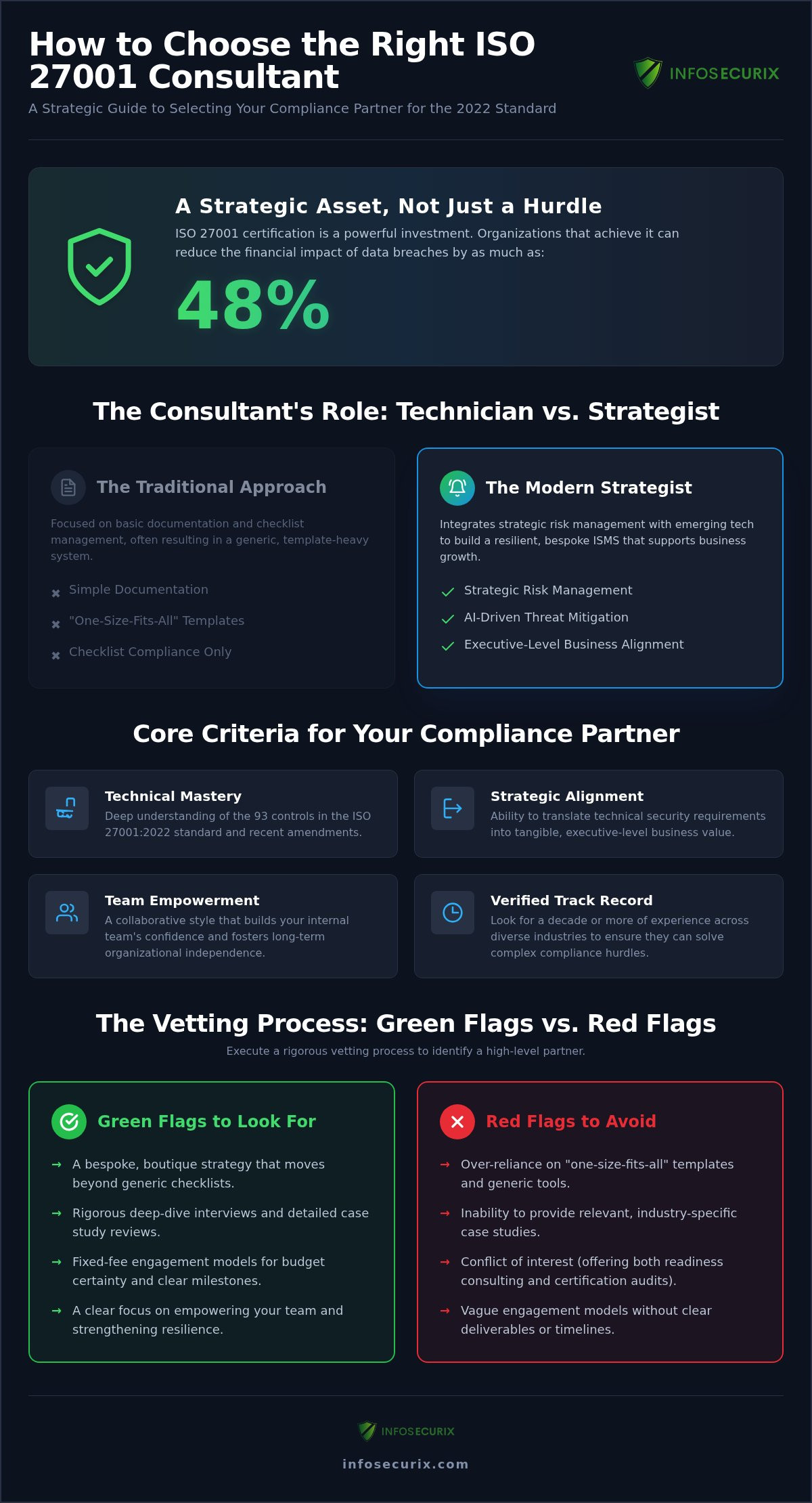
Organizations that achieve ISO 27001 certification can reduce the financial impact of data breaches by as much as 48 percent. This significant reduction in risk demonstrates that a robust Information Security Management System (ISMS) is a strategic asset rather than a mere administrative hurdle. You likely recognize that the transition to the ISO/IEC 27001:2022 standard requires a sophisticated approach: one that moves beyond generic templates to embrace technical rigor. Understanding how to choose an ISO 27001 consultant is the pivotal decision that determines whether your investment results in a resilient shield or a wasted expenditure.
Mastering the selection process ensures you find a partner who delivers a bespoke, audit-ready ISMS tailored to your unique risk profile. This guide provides a clear framework for evaluating consulting firms, helping you avoid the pitfalls of template-heavy providers while mastering the 2022 updates. You’ll gain a streamlined path to certification that strengthens your organizational resilience without causing operational disruption. We’ll explore the essential criteria for vetting these experts to ensure your chosen partner delivers a high-level security posture that withstands the complexities of the modern threat landscape.
Key Takeaways
- Recognize the shift in consultancy from simple documentation to strategic risk management and AI integration within the current regulatory environment.
- Master the essential vetting criteria to learn how to choose an ISO 27001 consultant who balances technical proficiency with a verified track record in diverse industries.
- Compare engagement models to select a fixed-fee approach that provides budget certainty and clear milestone tracking for your implementation project.
- Execute a rigorous vetting process using deep-dive interviews and case study reviews to identify red flags and ensure a high-level partnership.
- Leverage a bespoke, boutique strategy to move beyond generic checklists and build an ISMS that truly strengthens your organizational resilience.
Understanding the Role of an ISO 27001 Consultant in 2026
A specialist in the ISO/IEC 27001 standard acts as much more than a technical guide; they’re the architects of your organization’s digital trust. By 2026, the scope of this role has expanded significantly beyond the traditional boundaries of documentation and checklist management. These experts now integrate strategic risk management with emerging technologies, ensuring that your Information Security Management System (ISMS) is resilient against modern threats like AI-driven social engineering and complex supply chain vulnerabilities. When you begin evaluating how to choose an ISO 27001 consultant, you’re looking for a partner who can translate technical controls into executive-level security objectives that support business growth.
Top-tier consultants serve as a vital bridge between the granular mechanics of IT security and the high-level vision of the boardroom. They provide the necessary independent perspective to conduct rigorous gap analyses and internal audits, identifying blind spots that internal teams might overlook. This objective viewpoint is essential for building a system that doesn’t just pass an audit but truly secures the organization’s most valuable data assets.
The Distinction Between Readiness and Certification
Maintaining a clear separation of duties is critical for the integrity of your security framework. Readiness consultants focus on the design, implementation, and optimization of your ISMS, while separate certification bodies perform the final external audit to grant the official certificate. This boundary prevents conflicts of interest and ensures that your system is scrutinized by an unbiased third party. Engaging with specialized ISO 27001 certification readiness services ensures your foundation is solid, providing the meticulous preparation needed to face the external registrar with absolute confidence.
Key Deliverables of a High-Tier Consultancy
A sophisticated consultancy provides bespoke deliverables that reflect your actual organizational workflows rather than generic, “one-size-fits-all” templates. You should expect comprehensive gap analysis reports that pinpoint specific control deficiencies and provide a clear roadmap for remediation. These experts develop tailored policies that align with your unique operational culture, ensuring that security protocols are adopted naturally by your staff rather than being viewed as an administrative burden.
The final step in a successful engagement is a robust information security internal audit to validate your readiness. This simulated audit environment allows the consultant to stress-test your controls, ensuring that every Annex A requirement is met and that your team is prepared for the formal certification process. This systematic approach transforms compliance from a stressful event into a predictable milestone in your company’s evolution.
Core Criteria for Selecting Your Compliance Partner
Identifying the right expertise requires looking beyond basic credentials to find a partner who understands the nuance of your specific business operations. When evaluating how to choose an ISO 27001 consultant, you should prioritize a verified track record: look for at least a decade of experience across diverse industries to ensure they’ve seen and solved various compliance hurdles. Technical proficiency remains non-negotiable. This includes a deep mastery of the 93 controls within the ISO 27001:2022 standard and the ability to navigate recent amendments regarding climate-related risks. The ideal partner should demonstrate several foundational qualities:
- Technical Mastery: A deep understanding of the current 2022 standard requirements and Annex A controls.
- Strategic Alignment: The ability to translate technical security requirements into executive-level business value.
- Empowerment: A collaborative communication style that builds your internal team’s long-term confidence.
These traits ensure that your consultant doesn’t just build a system but fosters organizational independence. They don’t just deliver a certificate; they strengthen your resilience. Precision matters during this selection process.
Industry-Specific Experience and Knowledge
A consultant who understands your specific sector, whether it’s the high-speed environment of SaaS or the rigorous privacy demands of Healthcare, provides insights that a generalist might miss. They understand your field. These experts recognize the specific threat vectors and regulatory pressures unique to your industry. Such knowledge allows them to seamlessly integrate ISO 27001 with other frameworks like SOC2 or HIPAA, creating a unified compliance posture that reduces redundant work. For organizations looking to elevate their entire IT delivery model, a partner who understands ISO 20000 implementation can align security with service management excellence. This integrated approach ensures that security controls actually enhance operational efficiency instead of creating friction.
Methodology and Tooling
Assessing a firm’s methodology is vital to your long-term success: you must determine if they rely on generic templates or a bespoke framework designed for your scale. When you understand how to choose an ISO 27001 consultant based on methodology, you protect your organization from the “template-only” trap. A high-tier consultant works within your existing GRC software to ensure the ISMS remains a living part of your business. They should offer a structured path that includes detailed milestone tracking and transparent reporting. Central to this process is a comprehensive information security risk assessment that goes beyond surface-level threats. This rigorous methodology identifies the specific vulnerabilities that could impact your unique organizational resilience. By focusing on these core criteria, you ensure your partner acts as a seasoned guide who navigates the complexities of certification with absolute precision.
Evaluating Engagement Models: Finding the Right Fit
The commercial framework of a professional services engagement often serves as a silent indicator of a firm’s confidence in its own methodology. When you evaluate how to choose an ISO 27001 consultant, the way they structure their fees is just as telling as their technical certifications. A well-constructed model creates a harmony of interests between your internal team and the external guide, ensuring that every hour spent contributes directly to your organizational resilience. Choosing the wrong model can lead to misaligned incentives, where the focus shifts from rigorous security to managing billable hours.
Fixed-Fee vs. Hourly Rate Models
Fixed-fee engagements offer the highest level of predictability for corporate budgeting. They align the consultant’s goals with your specific certification timeline. If a firm is willing to commit to a fixed price, it suggests they possess the deep-rooted experience necessary to anticipate challenges before they arise. This model places the responsibility for efficiency on the consultant, encouraging a streamlined path to readiness. Conversely, hourly or “Time and Materials” models often introduce the risk of scope creep. In the complex world of compliance, open-ended engagements can lead to budget overruns that distract from the primary goal of securing your data. InfoSecurix utilizes a milestone-based, fixed-fee structure to ensure absolute accountability and transparency at every stage of the process.
Scope Definition and Managed Services
Defining the boundaries of your Information Security Management System (ISMS) is a critical early step that prevents unnecessary consulting costs. A seasoned guide will help you determine which departments, locations, and systems must be included, ensuring your security posture is robust without being over-engineered. This precision is a critical factor in how to choose an ISO 27001 consultant, as it prevents the project from becoming an unmanageable drain on resources. Beyond the initial implementation, many organizations benefit from a Virtual CISO (vCISO) option. This managed service provides the long-term leadership required for continuous compliance and the ongoing management of the Plan-Do-Check-Act (PDCA) cycle.
It’s vital to ensure your engagement contract explicitly includes support through both Stage 1 and Stage 2 external audits. The Stage 1 audit focuses on documentation and readiness, while Stage 2 is a deep dive into the practical application of your controls. Having your consultant present during these high-pressure evaluations provides a reassuring presence. It ensures that any auditor queries are addressed with technical precision and that your team remains focused on the successful outcome of the certification process. A hybrid model, combining a fixed project fee with a monthly retainer for post-certification support, often provides the best balance of initial momentum and long-term stability.
The Vetting Process: Questions to Ask and Red Flags to Avoid
Selecting a partner for your ISMS implementation requires a level of due diligence that mirrors the rigor of the standard itself. When you are determining how to choose an ISO 27001 consultant, the interview phase acts as your primary defense against superficial expertise. You must verify that the Lead Implementer who presents the proposal is the same individual who will lead your project through to completion. Many large firms utilize senior staff for the sales cycle only to delegate the actual work to junior associates. This practice often results in a lack of strategic depth. Requesting anonymized case studies or direct references from organizations within your specific sector provides concrete evidence of a consultant’s ability to handle your unique complexity.
A consultant’s own internal security posture and professional liability insurance are equally critical indicators of their professionalism. A firm that cannot demonstrate its own commitment to information security is fundamentally ill-equipped to safeguard yours. Verifying these credentials ensures that your partner “walks the talk” and possesses the financial stability to support a multi-year engagement. This meticulous vetting process transforms a potential risk into a secure, high-level partnership. It establishes the foundation of trust required for a successful certification journey.
Essential Interview Questions for Consultants
Probing the technical depth of a prospective advisor requires specific, high-level inquiries that go beyond surface-level compliance. Ask them to explain how they handle the risk treatment process for a company of your specific scale: their response should reflect a bespoke understanding of your operational reality rather than a generic formula. Inquire about their success rate for clients passing the Stage 2 audit on the first attempt. A high-tier professional will also be able to articulate exactly how they stay current with the ISO 27001:2022 standards and the 93 Annex A updates. This level of technical transparency is a hallmark of a seasoned guide who remains unfazed by regulatory evolution.
Consultant Red Flags: When to Walk Away
Recognizing warning signs early can save your organization from wasted resources and the reputational damage of an audit failure. Be wary of any firm that guarantees certification. No consultant can truly guarantee the decision of an independent, accredited registrar: such claims are a significant indicator of unprofessionalism. Another major red flag is the promise of a “ready-made ISMS in a box.” Template-only approaches fail to reflect actual organizational workflows and rarely survive the scrutiny of a rigorous external audit. Finally, avoid consultants who suggest skipping the internal audit phase. This step is the final validation of your readiness. A partner who ignores it is setting you up for failure. If you’re ready for a partner that prioritizes technical rigor over shortcuts, engage with our seasoned advisors today to secure your path to excellence.
InfoSecurix: Your Trusted Advisor for ISO 27001 Excellence
InfoSecurix represents the pinnacle of professional security guidance for organizations that demand more than a superficial certificate. With over 25 years of industry experience, we’ve remained a steady hand through decades of evolving threats and standard updates. Our boutique approach prioritizes bespoke security strategies that reflect your unique operational reality; we reject the generic, checklist-driven methods that often leave businesses vulnerable. When you analyze how to choose an ISO 27001 consultant, the decision ultimately rests on finding an advisor who views compliance as a catalyst for growth rather than a hurdle. We empower your team with a protective force that secures your certification and strengthens your overall organizational resilience.
The InfoSecurix Difference in Readiness Assessments
Our readiness assessments go beyond identifying technical gaps to provide a comprehensive roadmap for executive decision-makers. We deliver a detailed gap analysis that clarifies exactly where your controls stand against the ISO 27001:2022 requirements. This process isn’t just about passing an audit. It’s about future-proofing your business. By integrating ISO 22301 business continuity principles into your ISMS, we ensure your organization achieves holistic resilience. We focus on strategic corrective actions that offer long-term security value, transforming your compliance framework into a robust asset that builds customer trust and provides a significant competitive advantage.
Transitioning from Readiness to Sustainable Compliance
The journey toward excellence requires a partner who stands with you during the most critical moments of the certification process. We support your team through the high-pressure Stage 1 and Stage 2 external audits, acting as a reassuring guide to address auditor inquiries with technical precision. However, our true value lies in the independence we foster. We prioritize building your internal capability so your team can maintain and improve the ISMS independently long after the initial certification is won. This commitment to empowerment is a vital factor in how to choose an ISO 27001 consultant. It ensures you aren’t creating a permanent dependency on external firms. If you’re ready to master your compliance landscape, partner with InfoSecurix for your ISO 27001 journey and secure your organization’s future today.
Securing Your Path to Information Security Excellence
Navigating the complex landscape of information security requires more than a simple checklist. It demands a partner who can align technical rigor with your unique business objectives. Mastering how to choose an ISO 27001 consultant ensures that your organization doesn’t just pass an audit but builds a foundation of long-term operational resilience. By prioritizing technical proficiency, industry-specific experience, and a transparent fixed-fee engagement model, you secure a path to certification that is both predictable and profound.
InfoSecurix brings over 25 years of specialized security consultancy experience to every partnership. We combine a national reach with the meticulous, boutique-level attention to detail that complex standards like ISO 27001, SOC2, and ISO 22301 demand. Our team acts as a seasoned guide, transforming regulatory requirements into strategic advantages that protect your growth. When you’re ready to move beyond generic templates and invest in a truly robust security posture, we’re here to lead the way.
Schedule a Strategic ISO 27001 Readiness Consultation to begin your journey toward excellence with absolute confidence. Your organization’s security is a strategic asset. We’ll help you realize its full potential.
Frequently Asked Questions
What is the average cost of hiring an ISO 27001 consultant in 2026?
Consulting fees in 2026 depend on the scope of your ISMS and the complexity of your organizational structure. While industry data suggests various ranges for small and large enterprises, the most accurate way to budget is through a bespoke assessment of your current security maturity. Factors such as the number of employees and geographical locations will influence the final investment required to reach audit readiness with absolute confidence.
How long does the ISO 27001 consulting process typically take?
The implementation process typically spans six to twelve months depending on the size and complexity of the organization. Smaller firms with established processes may reach readiness sooner. Larger enterprises often require a full year to ensure that Annex A controls are effectively integrated across all departments and locations. This methodical pace reflects a commitment to building a resilient system that withstands the scrutiny of an external auditor.
Can we use a compliance automation tool instead of a consultant?
Automation platforms provide excellent support for evidence collection, but they lack the strategic nuance that a seasoned guide offers. These tools don’t understand your unique business culture or the strategic impact of technical processes. A consultant bridges this gap by interpreting the standard’s requirements in the context of your specific operational workflows. This ensures your security posture is robust rather than just digitally documented for compliance’s sake.
Do ISO 27001 consultants also perform the final certification audit?
No, the final certification audit must be conducted by an independent, accredited certification body to maintain impartiality. Your consultant prepares you for this external evaluation through gap analyses and internal audits. This separation of duties is a fundamental requirement of the ISO 27001 standard. It ensures the integrity of the certificate and provides the boardroom with an unbiased validation of the organization’s security posture.
What qualifications should an ISO 27001 consultant hold?
Qualified professionals should hold recognized certifications such as ISO 27001 Lead Implementer or Lead Auditor. When evaluating how to choose an ISO 27001 consultant, you should also verify their tenure in the industry. Look for a partner with at least a decade of experience across various sectors. This ensures they possess the technical proficiency and practical wisdom needed to handle the 2022 standard updates and modern cyber threats effectively.
How does a consultant help with the ISO 27001 risk assessment process?
Consultants facilitate the risk assessment by helping you identify and evaluate information security risks specific to your workflows. They guide the selection of appropriate controls from Annex A to mitigate these risks effectively. This collaborative process ensures that your risk treatment plan is both technically sound and operationally feasible. It transforms a complex requirement into a strategic exercise that strengthens your organizational resilience and protects your most valuable data assets.
What happens if we fail our audit after hiring a consultant?
Failure typically results in non-conformities that must be addressed before the certificate is granted. A high-tier consultant will stay with you to implement strategic corrective actions and prepare you for the follow-up audit. Their goal is to ensure your ISMS meets every requirement of the standard before the external registrar arrives. This partnership approach provides a reassuring presence during high-pressure evaluations and ensures a successful outcome for your certification journey.
Is it possible to hire a consultant only for the internal audit phase?
Engaging a consultant specifically for the internal audit is a common and highly effective strategy. This approach provides the independent perspective required by the standard to validate your system’s performance. It allows an expert to stress-test your controls and identify any non-conformities before the external registrar begins their evaluation. This targeted support is an excellent way to ensure a streamlined path to certification without disrupting your daily business operations.